IT Governance (essay)

==Introduction to IT Governance==

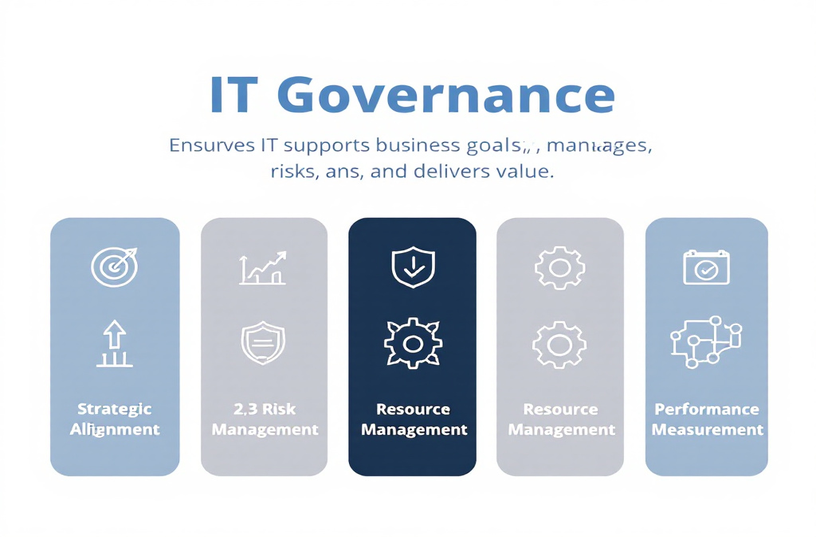
IT governance is the framework that ensures an organization’s information technology (IT) supports and aligns with its business goals. It involves defining clear roles, responsibilities, and processes to manage IT resources effectively, mitigate risks, and maximize value.

!Image Description
Choosing a Cybersecurity Framework: Key Considerations

Selecting a cybersecurity framework is not a one-size-fits-all decision. Organizations must evaluate multiple factors to ensure the framework aligns with their unique needs and goals:
[Read more]

DORA framework (financial sector)

1. DORA’s Primary Focus: Strengthening ICT Risk Management in the Financial Sector

The Digital Operational Resilience Act (DORA) specifically targets the financial sector, including:

  • Banks
  • Insurance companies
  • Investment firms
  • Payment service providers
  • Crypto-asset service providers

DORA introduces strict cybersecurity standards and reporting obligations for these entities, as well as for their third-party ICT service providers. The goal is to ensure that financial institutions can withstand, respond to, and recover from cyber threats and operational disruptions.

[Read more]

GDPR EU Data Protection

1. Overview of GDPR

The General Data Protection Regulation (GDPR) is a comprehensive data protection law enacted by the European Union. It became fully enforceable on May 25, 2018, replacing the 1995 Data Protection Directive. GDPR is designed to harmonize data privacy laws across Europe and protect the personal data and privacy of EU citizens and residents.


2. Scope and Applicability

GDPR applies to:

  • All organizations (regardless of location) that process the personal data of EU citizens or residents.
  • Companies based outside the EU if they offer goods or services to, or monitor the behavior of, individuals in the EU.
  • Data controllers and processors: Any entity that collects, stores, or processes personal data must comply with GDPR.

3. Key Objectives of GDPR

  • Empower individuals by giving them greater control over their personal data.
  • Standardize data protection laws across the EU, simplifying the regulatory environment for international businesses.
  • Enhance data security by requiring organizations to implement robust data protection measures.
  • Increase transparency in how personal data is collected, used, and shared.

4. Core Provisions of GDPR

GDPR consists of 99 articles that outline specific requirements for organizations, including:

[Read more]

GRC Framework

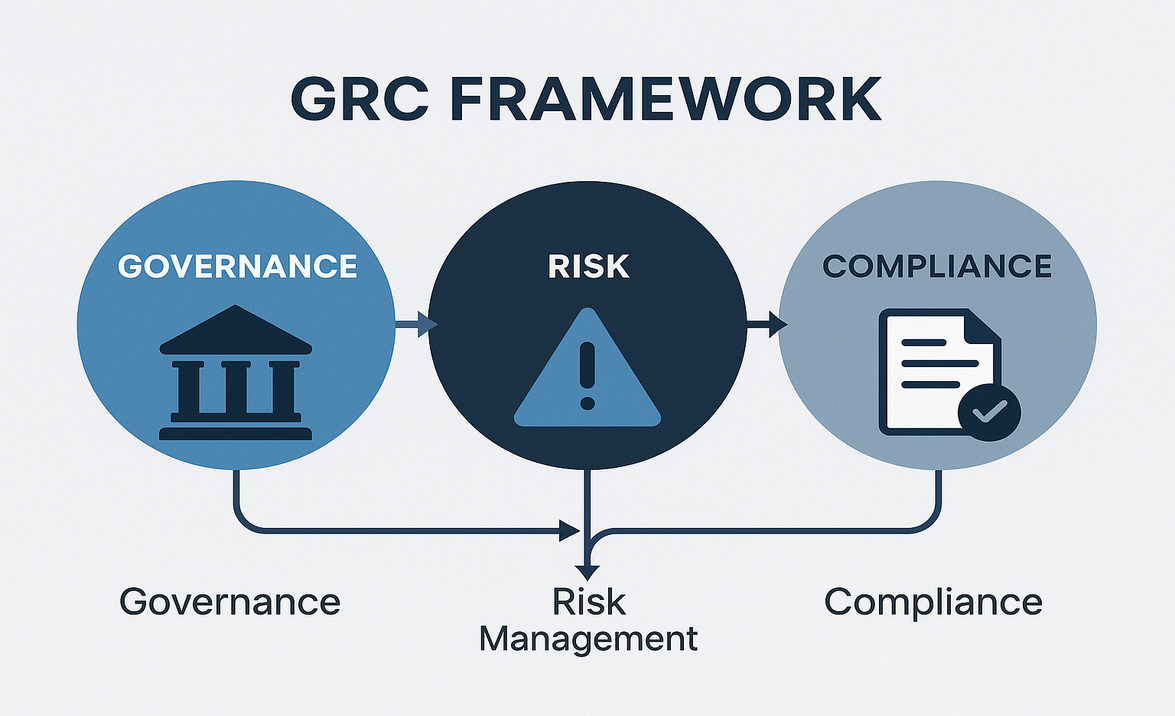
==G.R.C. Governance, Risk, Compliance==

G.R.C. compliance ensures that IT aligns with business goals, manages risks and meets compliance requirements.

!Image Description

Governance: involves setting policies and procedures, guiding how to operate and make decisions, defining goals, assigning roles, ensuring actions align with the mission and values and promoting accountability, transparency, and ethical behavior. Risk management: identifies, evaluates, and addresses threats such as financial uncertainties, cybersecurity threats, operational issues, and regulatory non-compliance. It minimizes the impacts of unexpected events, protects resources, enables smooth operations, and supports decision-making. Compliance: entails following relevant laws, regulations, standards, and policies. It ensures the organization operates legally, enhances reputation, credibility, and trust, and helps avoid legal problems and obtain necessary certifications and licenses.

[Read more]

HIPAA Framework (medical sector)

Key Points About HIPAA

1. Definition and Origin

  • HIPAA (Health Insurance Portability and Accountability Act) is a major U.S. law enacted in 1996 under President Bill Clinton.
  • It applies to healthcare providers, health plans, healthcare clearinghouses, and their business associates.

2. Main Objectives

  • Health Insurance Portability: Ensures coverage for employees transitioning between jobs.
  • Fraud Prevention: Secures Protected Health Information (PHI) and standardizes its handling.

3. Importance of HIPAA

  • Standardization: Streamlines administrative processes and secures data sharing among healthcare entities.
  • Data Protection: Requires organizations to safeguard PHI (names, addresses, Social Security numbers, medical records, etc.).
  • Patient Control: Grants patients the right to access their records and control how their data is used (e.g., prohibits use for marketing or research without consent).
  • Accountability: Imposes financial penalties (up to $1.5 million) and criminal charges (up to 10 years in prison) for violations.

4. Required Security Measures

  • Administrative Safeguards: Employee training, incident response plans, access management.
  • Physical Safeguards: Controls access to facilities and equipment (badges, document shredding).
  • Technical Safeguards: Encryption, automatic logoff, unique user identification.
  • Risk Assessments: Organizations must identify and mitigate threats to PHI.

5. Benefits of Compliance

  • Enhanced Security: Reduces the risk of data breaches.
  • Patient Trust: Ensures sensitive information is protected.
  • Process Improvement: Optimizes internal practices and vendor management.

6. Enforcement and Penalties

  • The Office for Civil Rights (OCR) oversees compliance and conducts audits.
  • Violations are categorized by negligence level, with corresponding fines.

In summary: HIPAA protects the privacy and security of health data, holds organizations accountable, and empowers patients with control over their information. Compliance is critical to avoid severe penalties and build trust in the healthcare system.

[Read more]