IT Governance (essay)
==Introduction to IT Governance==
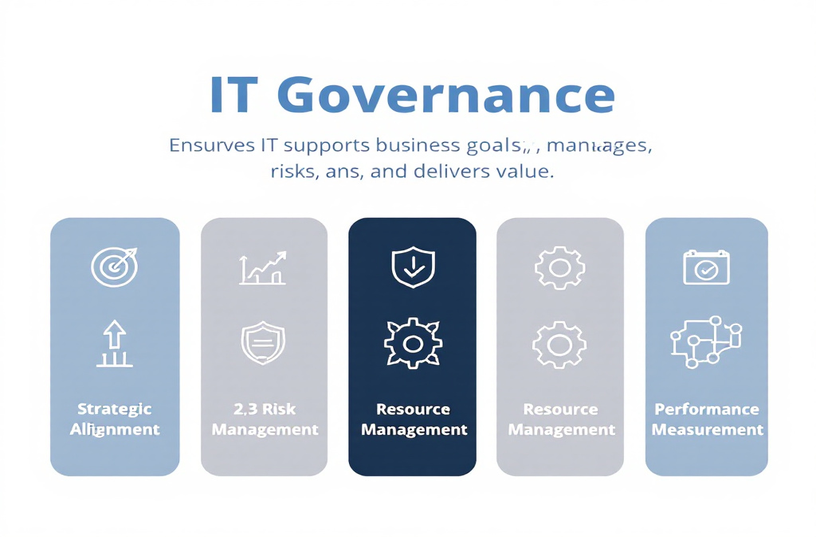
IT governance is the framework that ensures an organization’s information technology (IT) supports and aligns with its business goals. It involves defining clear roles, responsibilities, and processes to manage IT resources effectively, mitigate risks, and maximize value.
!
Choosing a Cybersecurity Framework: Key Considerations
Selecting a cybersecurity framework is not a one-size-fits-all decision. Organizations must evaluate multiple factors to ensure the framework aligns with their unique needs and goals:
- Industry and Regulatory Requirements Compliance with sector-specific regulations (e.g., GDPR, HIPAA, PCI-DSS) and legal obligations.
- Alignment with Security Needs and Scope The framework should address the organization’s specific risks, threats, and security objectives.
- Flexibility and Customization Ability to adapt the framework to the organization’s size, complexity, and evolving threats.
- Maturity of the Framework Proven effectiveness, adoption rate, and track record in similar environments.
- Scalability Capacity to grow with the organization and accommodate future technological or operational changes.
- Support and Community Resources Availability of documentation, training, tools, and active user communities for guidance.
- Cost and Resource Requirements Budget for implementation, maintenance, and training or hiring skilled personnel.
==For what benefits ?==
| Enhance Security Posture | Improved Trust | Data Protection |
|---|---|---|
| Cost Reduction | Resource Optimization | Regulatory Compliance |
Read other posts